


WHO IS RYAN FOLAND?
Ahoy, I’m a speaker, TEDx coach, and executive presentation coach who helps leaders develop and deliver talks, speeches, and presentations people remember.
I’ve delivered four TEDx talks and coached bestselling authors, executives, founders, entrepreneurs, and other leaders preparing for important stages. My work focuses on helping people clarify the idea that matters, shape it into a compelling message, and deliver it with confidence.
I’m also the author of SpeakerSHIP and the Getting Your SHIP Together book series, and Director of the UCI ANTrepreneur Center.
When I’m not coaching, teaching, or speaking, you’ll probably find me sailing, drawing stick figures, or embracing life as a proud ginger .

FYI, GINGERS DO HAVE SOULS
I grew up in Huntington Beach, California. I was the freckle-faced kid with sun-bleached hair and a favorite pair of red suspenders that probably weren’t doing much for my social standing.
To make matters worse, both of my parents were principals. Thankfully, not at my school. Otherwise life might have been even more miserable.
I was an eager student, which was great for my teachers and considerably less helpful when it came to making friends. I often felt like the outsider, the easy target, the kid who wasn’t getting picked for the team.
And I got bullied. A lot.
My neighbor kicked me and even bit me on more than one occasion. My mom felt so bad about me never getting picked for basketball that she bought me a basketball of my own. Unfortunately, owning a basketball didn’t magically give me anyone to play with.
One day, after being hounded all the way home by a group of bullies, I locked myself in my room and cried. “Don’t Worry, Be Happy” played on my CD player over and over again, which, given the circumstances, wasn’t particularly helpful.
When my dad came home and found me, he’d had enough.
“Ryan, we’re going to enroll you in karate.”
I still remember the moment the tears stopped.
CONFIDENCE STARTED WITH HOW I STOOD
Martial arts gave me something I didn’t have before: a way to practice confidence before I actually felt confident.
I learned how to stand differently. Shoulders back. Head up. Feet planted. In a horse stance, you don’t shrink yourself. You take up space.
At first, those were just physical instructions. But something interesting happened. The more I practiced carrying myself with confidence, the more confident I started to feel.
I loved martial arts. I went on to earn my black belt and continued training on and off for years. Eventually, I had the opportunity to teach it myself.
That brought the story full circle. I could help kids develop some of the same confidence I had needed so badly when I was their age. Not just the confidence to defend themselves, but the confidence to stand tall, use their voice,
and speak up when something wasn’t right.
Looking back, I didn’t have the language for it then, but I was learning a lesson that would eventually become central to my work as a speaker and coach.

YOU DON’T HAVE TO WAIT UNTIL YOU FEEL CONFIDENT TO START ACTING CONFIDENT.
Sometimes changing how you carry yourself helps the confidence catch up.
WHAT WOULD KELLY HRUDLEY DO?
I was a devoted Los Angeles Kings fan and played ice hockey throughout my youth. Naturally, I chose the most reasonable position for a kid who had spent years trying not to get picked on: goalie.
Apparently, I decided having people deliberately shoot hard objects at me was a good next step.
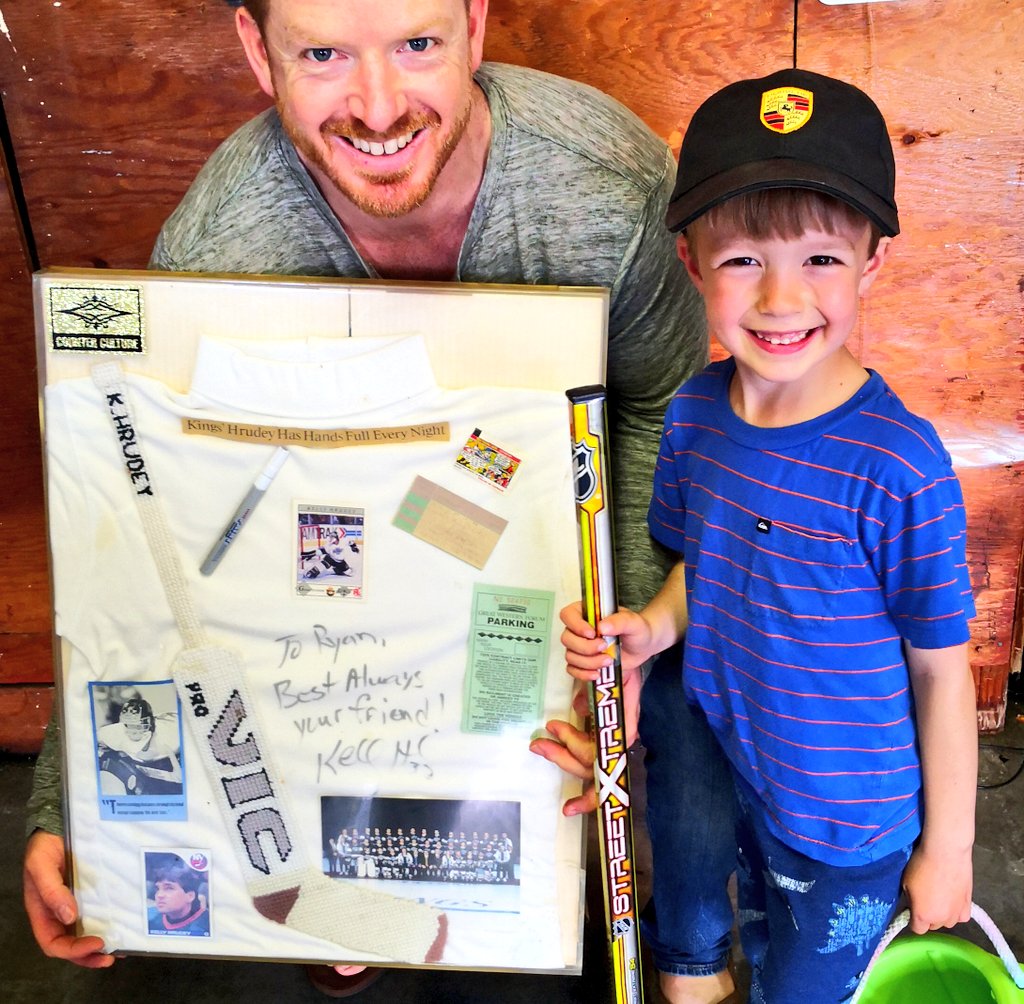
My hero was Kings goaltender Kelly Hrudey. I followed his career, studied how he played, and even got a jersey signed by him. I still have it. Years later, I pulled it out to show my nephew Caleb. Some childhood heroes stick around.
There was something about being a goalie that fit me. You’re the last line of defense. When something gets through everyone else, it’s yours. You can’t hide. And there’s nobody standing behind you to save the day.
The position also teaches you something about failure. Eventually, you’re going to get scored on. And when you do, the game doesn’t stop so you can dwell on it.
You reset. You get back into position. You prepare for the next shot.
Looking back, hockey was reinforcing something martial arts had already started teaching me. Confidence isn’t about avoiding situations where you might fail. It’s knowing you can take the hit, recover, and stay in the game.
I HAD NO IDEA WHAT I WAS WALKING INTO
I arrived at UC Santa Barbara undeclared and as an honors student, which came with one incredible perk: priority registration.
There was also one small problem. I had absolutely no idea what I wanted to study.
Back then, choosing classes meant flipping through a paper course catalog that felt several inches thick. I remember looking at all those possibilities and feeling completely overwhelmed by the reality that I could take almost anything I wanted.
So I came up with what seemed like a perfectly reasonable solution.
I asked my mom to pick my classes.
I figured they were mostly general education requirements anyway. What difference could it make?
Apparently, quite a bit.
I didn’t even pay much attention to what she’d chosen until I showed up for my first day of class and walked into something called DA-1. I had no idea what “DA” stood for.
The room should have been my first clue.
Rows of red velvet seats faced a huge stage framed by red curtains. I’d never been in a classroom like it. In fact, I hadn’t really been around theater at all.
Then it clicked.
DA stood for Dramatic Arts.
My classroom was an actual theater.
And then I heard two words that have probably changed the trajectory of more college students than anyone realizes:
Extra credit.
There was an opportunity to earn extra credit by showing up for something after class. I didn’t really understand what it was, but extra credit was enough to get me there.
When I showed up, I didn’t see the person I was expecting. There were a few people hanging around, and eventually I wandered toward an open door with bright lights spilling out of it.
Inside was a room with light wood from floor to ceiling. A folding table sat at the other end with four people behind it, two of them wearing hats. A girl handed me a piece of paper and motioned toward a chair.
I sat down.
They looked at me.
I looked at them.
I looked down at the paper.
I was completely confused.
There were a couple of lines on it, so I did the only thing that seemed logical.
I read them.
They started laughing.
I had no idea why.
I immediately assumed I’d done something wrong. I felt the blood rush to my face. I was surrounded by people I didn’t know, in a place I didn’t understand, doing something I hadn’t realized I’d signed up to do.
Suddenly, the extra credit wasn’t worth it.
I got out of there, grabbed my skateboard, and I’m pretty sure I cried on the way home.
Not exactly the triumphant first day of college I had envisioned.
A little while later, I got a phone call.
They wanted me to be an understudy.
I didn’t know what an understudy was.
That’s when someone finally explained that what I’d stumbled into was an audition for a play.
I’d never been in a play before. My instinct was to tell them there had obviously been some sort of mistake.
Then he said something that changed my mind.
“There will be a lot of cool people and beer. You should show up.”
Okay.
He gave me the address.
I showed up.
The professor they were hoping would take the role ultimately didn’t, which meant the role became mine.
At the first read-through, the description had been pretty accurate. There were a bunch of cool people, a cooler full of beer, a script waiting for me, and a highlighter.
I grabbed a Natty Light, sat down, opened the script, and experienced my first-ever read-through.
The production was based on Sin City: A Dame to Kill For, and I was playing Marv, a massive brute of a character who solves a lot of problems with his fists.
Now, this I understood.
I’d never taken an acting class, but I had years of martial arts experience. When we started working on the stage fights, some of the traditional theatrical punches felt fake to me.
So I spoke up.
I offered to help choreograph some of my own fight scenes using what I knew from martial arts. Soon we had spinning roundhouse kicks, bottles breaking over people’s heads, and action sequences that looked and felt far more real.
And I loved it.
The kid who had walked into that audition confused, embarrassed, and ready to run away had accidentally discovered a world where a part of his past suddenly became an advantage.
One accidental class became an audition. One humiliating audition became a role. One role became another.
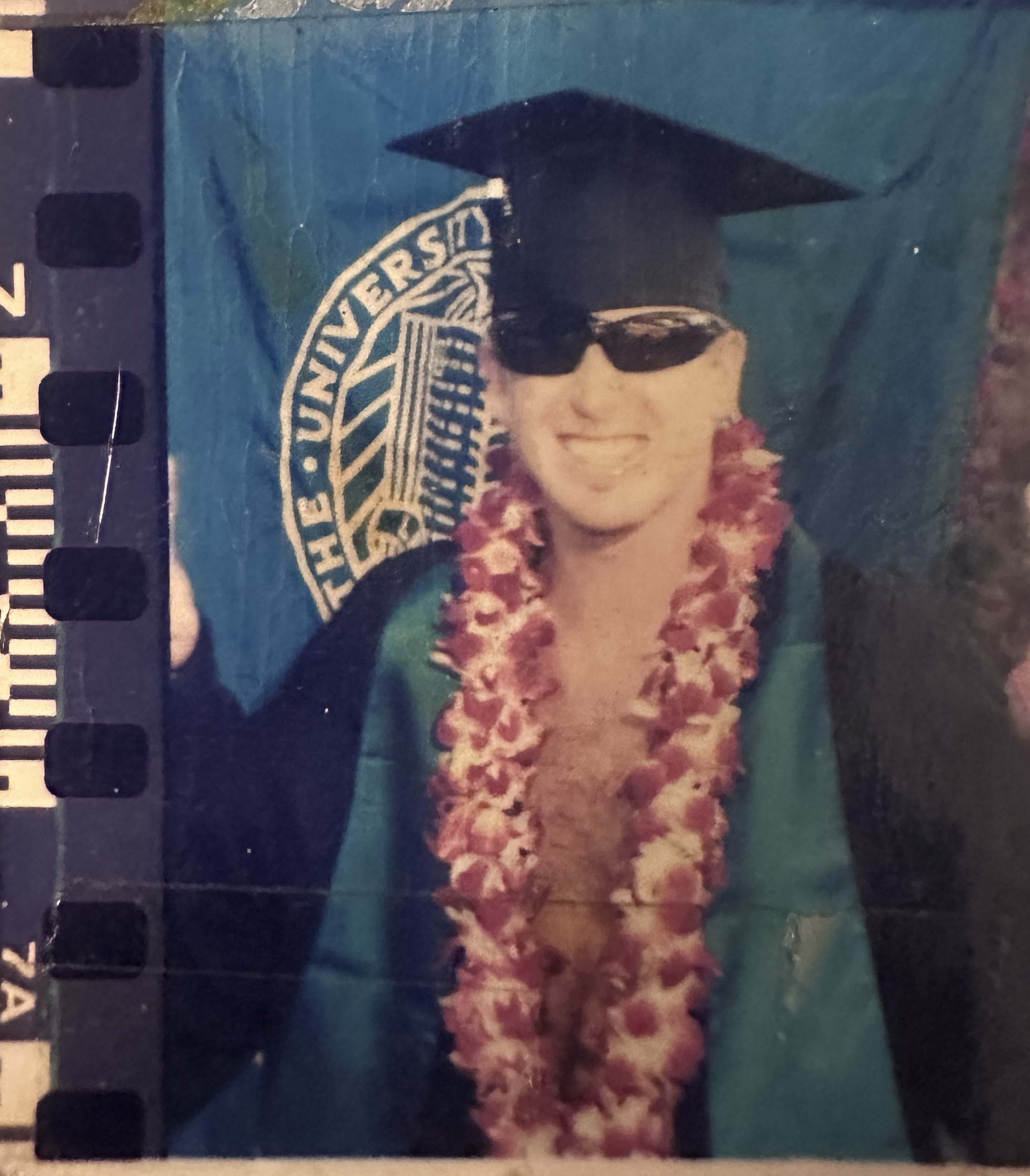
Eventually, Dramatic Arts became one of my two degrees at UCSB, alongside Business Economics. Theater became acting, directing, producing, storytelling, blocking, getting off book, learning how audiences respond, and discovering what happens when you take an idea off the page and put it on its feet.
I couldn’t have known any of that when I handed my mom a giant course catalog and asked her to choose my classes.
But looking back, that one decision created a ripple that became a current in my life, and I’m still riding it today.
GIVING BACK
Years after being the kid who got chased home by bullies, I found myself thinking about kids going through the same thing.
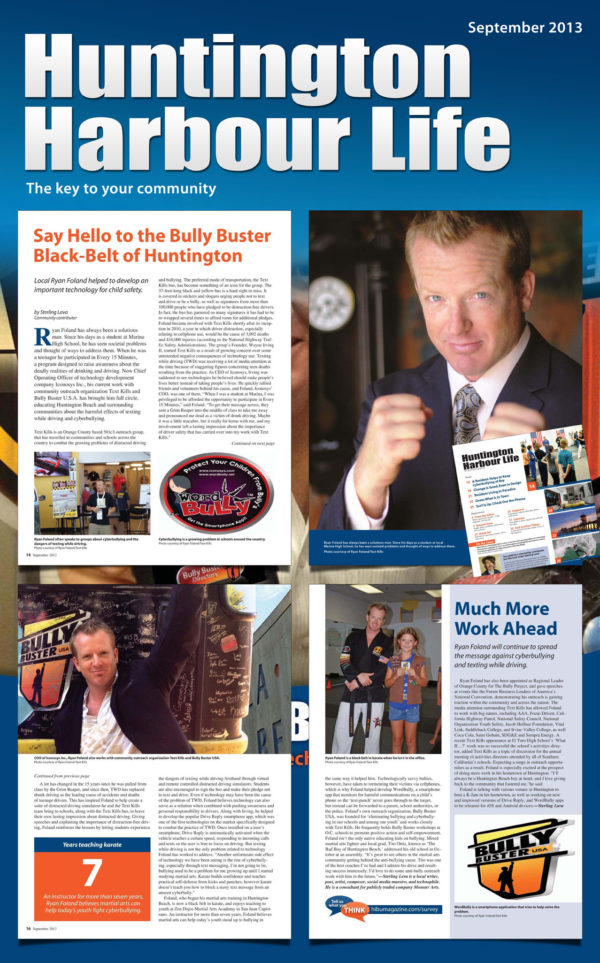
In 2011, I created Bully Buster USA and began traveling around Orange County speaking to middle school and high school students about bullying. I developed workshops to help students stand up for themselves and for each other.
The work was deeply personal. I knew what it felt like to be the kid who wanted the bullying to stop. Now I was standing in front of rooms full of kids, trying to give them some of the confidence I had needed at their age.
And something unexpected happened along the way.
I discovered how much I loved speaking.
Those workshops started a new obsession: How do you hold a room? How do you make an idea memorable? How do you get people to actually care?
I didn’t know it yet, but those questions were pointing me toward the next chapter of my life.
THE ADVICE MY DAD PASSED DOWN
My dad once struggled to make the jump from PE teacher to school administrator. He had the credentials and kept getting interviews, but he wasn’t getting the jobs.
Finally, a mentor told him, “I can help you get a job if you do two things.”
“Cut your hair and go to Toastmasters.”
My dad did both.
He eventually became a vice principal, then a principal, and later helped teach other educators to become administrators and leaders.
Years later, when I hit a difficult point in my own life, my dad passed that advice down to me.
I didn’t cut my hair.
But I did go to Toastmasters.
And that decision changed the direction of my life.
I found a Toastmasters club in Dana Point, near where I was living in Laguna Beach. At first, I mostly sat in the back and watched.
But I kept showing up.
Eventually, I started working through what was then called the Competent Communicator program: a series of speeches designed to develop the fundamentals of public speaking.
The process was beautifully simple.
You speak. Someone evaluates you. You learn what worked and what didn’t. Then you come back and do it again.
My theater background gave me some natural comfort performing, but Toastmasters gave me something different:
Reps.
Eventually, I entered my first speech competition.
I won.
So I entered more. I won some. I lost some. And somewhere along the way, something happened that made the whole Toastmasters journey mean a lot more than trophies.
My mom and dad were watching one of my competitions. We were sitting together listening to some of the other speakers when a folded note started making its way down the row toward my dad.
He opened it.
His reaction was immediate.
He got up and left the room.
I was curious enough that I slipped out after him.
Outside, I found my dad leaning through the open passenger-side window of a car, talking excitedly with an older man. As I got closer, it was obvious that they knew each other — and that seeing each other was a big deal.
Then I learned who he was.
He was the mentor.
The same man who, years earlier, had listened to my dad complain about not getting the administrative jobs he wanted and given him two pieces of advice:
Cut your hair.
Go to Toastmasters.
Decades later, he had happened to attend a Toastmasters speech competition. He saw the name Ryan Foland, spotted my dad sitting beside me, recognized him, and quietly passed a note down the row rather than interrupting the event.
And somehow the three of us ended up standing together in a parking lot because of a piece of advice he’d given my dad years before I ever joined Toastmasters.
I’ve never forgotten that moment.
His advice helped my dad.
My dad passed the advice to me.
And now much of my life is spent helping other people find their voice and become better communicators.
That’s what good advice can do.

I THOUGHT I WAS ABOUT TO GET FIRED
By 2014, I had found a place where a lot of the strange pieces of my life finally fit together: entrepreneurship, creativity, teaching, communication, and my desire to help other people avoid some of the mistakes I’d made.
I joined UC Irvine to help launch what would eventually become the ANTrepreneur Center, working directly with students who wanted to turn ideas into companies.
I loved it.
Maybe a little too much.
I threw myself completely into the work. We made giant paper airplanes, rode sponsored hoverboards around campus, built a six-foot Snapchat ghost, and tried just about anything we could think of to get students interested in entrepreneurship.
We got attention.
We also got complaints.
Then one day, I got called into my boss’s boss’s office.
I was convinced I knew why.
I was about to get fired.
Walking into that meeting, my mind was racing.
For the previous 18 months, I had poured almost everything I had into the entrepreneurship center. My energy. My creativity. My relationships. My identity.
And now I was convinced all that envelope-pushing had finally caught up with me.
Sitting there waiting for the meeting to begin, I started imagining what would happen next.
If I lost this job, what did I have?
That question hit harder than the possibility of getting fired.
I realized I had fallen into a pattern I’d experienced before. I would throw myself completely into a company, a project, or a position. I’d help build its reputation, its audience, and its value.
But if that company disappeared or that job ended, I felt like I was starting over.
I didn’t want to keep doing that.
So before anyone in the room had even told me why I was there, I made a decision:
I was going to start building my own name alongside whatever I built for someone else.
Ryan Foland couldn’t just be the person behind the company, project, or university program.
I needed to figure out what I stood for.
There was just one problem with this dramatic revelation.
I wasn’t getting fired.
I was getting promoted.
They wanted me to take what I’d learned from our unconventional outreach and help apply that thinking more broadly across the university.
I walked into the room preparing for an ending and walked out with a bigger opportunity.
But the realization I’d had while waiting for the bad news didn’t disappear.
I started taking my personal brand seriously.
Not because I wanted to become an “influencer.” I wanted to build something that could accumulate over time — my ideas, my work, my reputation, and eventually my voice — regardless of what title happened to be underneath my name.
That decision would eventually lead me toward writing, social media, speaking around the world, books, TEDx talks, and the work I do today.
But at the time?
I had absolutely no idea how to build a personal brand.
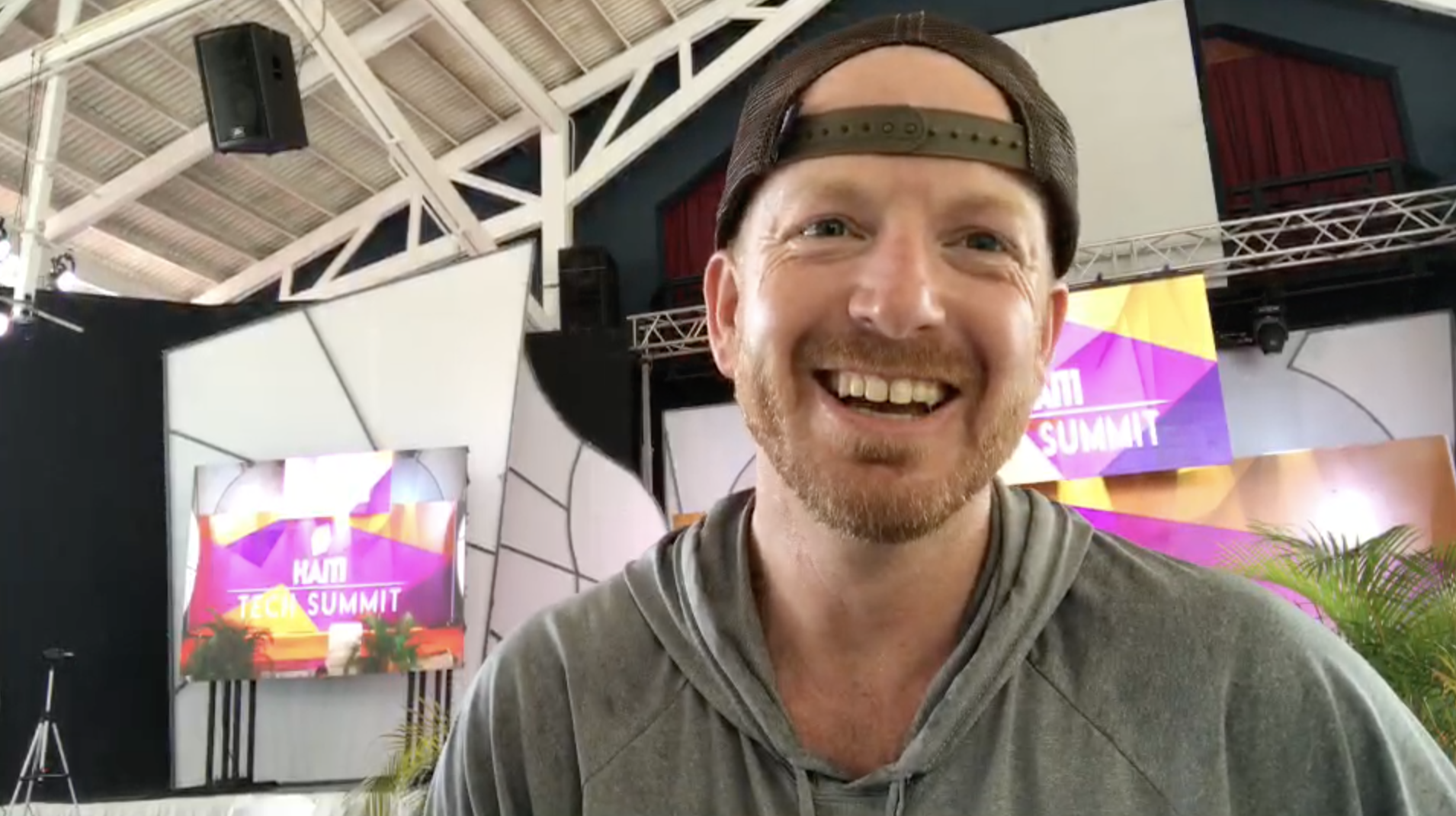
I HAD NO IDEA HOW TO BUILD A PERSONAL BRAND
I had decided I needed to start building something that couldn’t disappear when a job, company, or project ended:
my own voice and reputation.
There was just one problem.
I had no idea how to do it.
I was writing, but nobody was reading. I wanted to speak, but nobody was asking me to speak. I was experimenting with social media, but mostly felt like I was shouting into the internet.
Then a friend at Microsoft invited me to a networking event at the Hollywood Hills home of bestselling author Keith Ferrazzi.
I said yes.
I had no idea that night would change the trajectory of my life.
Keith Ferrazzi was known for bringing interesting groups of people together, and when I arrived at his house in the Hollywood Hills, I found myself surrounded by successful entrepreneurs and professionals from around the world.
I didn’t really know what I was doing there.
About an hour into the evening, Keith called everyone into his living room.
He asked us to put away our phones.
Then things got uncomfortable.
Instead of asking us to introduce ourselves with our accomplishments, companies, or impressive titles, he asked us to talk about what wasn’t going well.
Professionally.
And personally.
We were assigned to tables with people we didn’t know and asked to be vulnerable with complete strangers.
When it was my turn, I decided to cut through the polished version of myself and tell the truth.
I was writing, and nobody was reading.
I wanted to speak, but nobody cared.
I wanted to build a personal brand, but I didn’t understand how.
For years, I’d been much more comfortable putting a company, project, or job in front of me. My identity was connected to whatever I happened to be building.
Putting myself out there felt different.
Riskier.
If someone rejected my company, they were rejecting the company.
If I put Ryan Foland out there and people rejected that?
Well…now they’re rejecting me.
But that night helped me begin to understand something that would eventually become central to how I communicate.
People don’t connect with résumés.
They connect with people.
I started experimenting more openly. I wrote. I made videos. I drew stick figures. I shared ideas. And eventually, I became more willing to share the things that hadn’t gone perfectly, too.
Slowly, people started responding.
Then opportunities started appearing.
Speaking invitations began coming in — first close to home, then farther away, and eventually internationally.
What started as an uncomfortable conversation in a stranger’s living room became part of a much larger shift in how I thought about communication, connection, and being willing to let people see the person behind the work.
Those ideas would eventually influence my speaking, my teaching, and even a book.
But first, I had to learn something that sounds incredibly simple:
If you want people to connect with you, you have to give them someone real to connect with.
THEN PEOPLE STARTED LISTENING
Once I started putting my own ideas into the world, something began to change.
People responded.
Writing led to conversations. Conversations led to opportunities. Opportunities led to stages.
I started speaking more seriously, eventually giving four TEDx talks and speaking to audiences around the world. I wrote books. I taught. I coached. And somewhere along the way, communication stopped being something I was trying to get better at and became a major part of my life’s work.
The funny thing is, there was never one grand plan.
I just kept following the next opportunity to communicate an idea that mattered.
When I first started trying to build my personal brand, I thought I needed people to notice me.
Over time, I realized that was the wrong goal.
I needed to have something worth noticing.
So I kept working on my ideas and how I communicated them.
I wrote articles. I experimented with social media. I made videos. I drew stick figures to explain complicated ideas simply. I said yes to speaking opportunities and kept practicing whenever I could.
Toastmasters had taught me the value of reps, and now I was getting those reps in the real world.
Little opportunities started creating bigger ones.
I began receiving invitations to speak beyond Southern California, then across the country, and eventually internationally.
TEDx became another important part of that journey.
I’ve now delivered four TEDx talks, but what fascinated me wasn’t simply getting onto a TEDx stage. It was the process of taking an idea that felt big and messy and figuring out how to make it clear enough that another person could understand it, remember it, and hopefully do something with it.
That same fascination found its way into my writing.
I became the author of SpeakerSHIP and the Getting Your SHIP Together book series, and co-authored Ditch the Act.
And eventually, something else happened.
People started asking me to help with their ideas.
Authors, executives, entrepreneurs, founders, and other leaders came to me when they had an important talk, presentation, or stage ahead of them.
That felt surprisingly familiar.
Karate had taught me that confidence could be practiced.
Theater had taught me how to inhabit a story.
Toastmasters had taught me the power of repetition and feedback.
Entrepreneurship had taught me how important it is to make an idea understandable.
And all those years of speaking had taught me that a great idea isn’t enough.
You have to know how to get it out of your head and into someone else’s.
That’s ultimately what I became obsessed with helping people do.
Not manufacture a performance.
Not memorize somebody else’s idea of what a speaker should sound like.
Find the idea that matters.
Make it clear.
And learn how to deliver it as yourself.
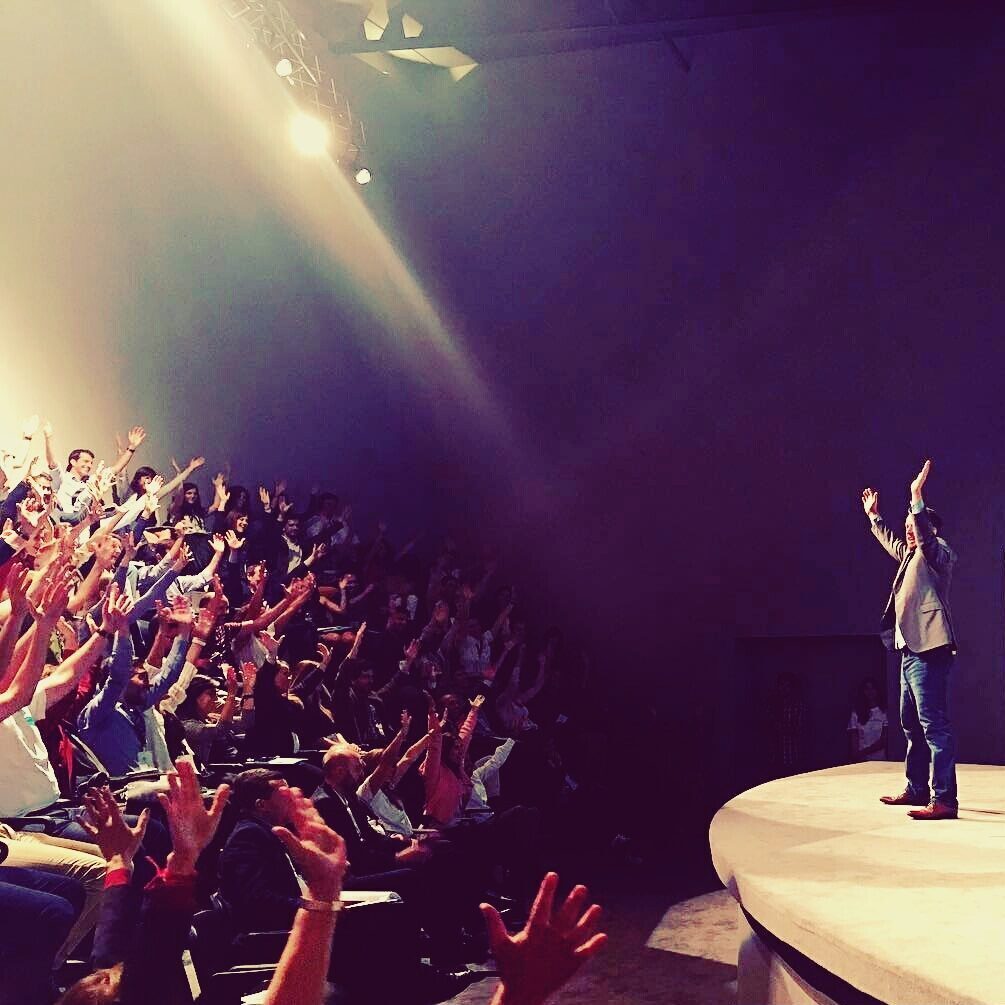
YOUR IDEA ISN’T FINISHED UNTIL SOMEONE ELSE UNDERSTANDS IT.
Find the idea. Make it clear. Make it yours.

THE LESSONS I LEARNED THE HARD WAY
I’ve started companies, joined companies, built products, made money, lost money, chosen great partners, and chosen some very wrong ones.
For a long time, I was attracted to possibility. If I saw an exciting idea and believed I could help make it happen, I wanted in.
Sometimes that instinct served me well.
Other times, I ignored little red flags because I was too focused on what something could become.
Over time, I learned that the people you build with matter just as much as the thing you’re building. And when something no longer aligns with your values, walking away can require more courage than staying.
Some of my most expensive mistakes became some of my most valuable teachers.
I used to think the most important questions about a potential business partner were about experience, connections, skills, and opportunity.
Those things matter.
But I’ve learned to pay much closer attention to character.
How does someone behave when things aren’t going well? How do they communicate under stress? How do they treat people when there’s nothing to gain? What happens when money gets tight, expectations aren’t met, or two people strongly disagree?
I’ve had business relationships that taught me those lessons in ways I wouldn’t recommend.
I’ve experienced dishonesty, broken trust, threats, conflicts over money, and partnerships that looked very different during difficult times than they did during the excitement of starting something new.
Looking back, there were often signals along the way that I either missed or chose not to give enough weight.
That changed the way I think about business.
Don’t just evaluate the opportunity. Evaluate the people you’re entering it with.
One of the most complicated examples came while writing Ditch the Act.
The book itself was about something I deeply believe: we connect more meaningfully when we’re willing to stop pretending everything is perfect and allow people to see the human being underneath.
Writing it forced me to examine some of my own relationships through that same lens.
During that process, I came to terms with the fact that my working relationship with my co-author and business partner, Leonard Kim, was no longer one I wanted to continue. So in December 2019, I chose to leave our company.
That wasn’t a comfortable decision.
I worried about the optics. We’d spent years selling and writing a book together. How do you promote a book about authenticity when the business partnership behind it didn’t survive?
Eventually I realized that was precisely the point.
Ditch the Act was never supposed to mean that everything works out perfectly.
It means being willing to acknowledge the good, the not-so-good, and the complicated parts in between.
Sometimes practicing what you preach means admitting that something isn’t working.
Sometimes it means walking away.
And sometimes the lesson doesn’t become clear until you’ve paid for it.
I wouldn’t choose every mistake I’ve made again. But I wouldn’t throw away what they taught me, either.
WHAT MATTERS MOST TO ME
For all the things I’ve built, written, taught, and had the chance to do, the thing I’m most proud of isn’t professional.
It’s my relationship with my wife, Cyn.
We’ve been together for more than a decade, and like any real relationship, ours has had ups and downs. We’ve grown individually and together, challenged each other, supported each other, and continued figuring out what it means to be partners.
Cyn recently earned her PhD from UCLA, and I’m ridiculously proud of her.
But when I think about what makes me happiest, it’s usually not the big milestones.
It’s the little stuff.
The older I get, the more I appreciate the ordinary moments.
Hitting the snooze button so we can snuggle for another few minutes.
Making coffee in the morning.
Taking an afternoon walk.
Getting outside. Being near the ocean. Putting my phone away and actually being wherever we are.
Cyn and I share a love of nature, the ocean, wellness, and helping other people. We also hold each other accountable. She challenges me to be better, and I try to do the same for her.
Business partners have come and gone. Jobs have changed. Projects have started and ended. There have been successes I’m proud of and mistakes I’d rather not repeat.
Cyn has been there through all of it.
And maybe that’s part of what I’ve learned as I’ve gotten older.
It’s easy to measure a life by the visible things: the stages, books, titles, businesses, awards, or accomplishments.
But those aren’t usually the moments I want back at the end of a day.
I want the coffee.
The walk.
The ocean.
The stupid joke that makes us both laugh.
The extra few minutes before getting out of bed.
The little stuff is actually the big stuff.


IF I’M NOT SPEAKING, I’D RATHER BE SAILING
My favorite place to get away is Catalina Island, 26 miles off the coast of Southern California. My family spent a lot of time there when I was growing up, and I developed a deep connection to the ocean, the island, and the feeling of being just far enough away from everything else.
Cyn and I have a 1977 Cal 34 sailboat named BINGO, and we sail to Catalina whenever we can. Out there, I disconnect from technology and reconnect with nature, with Cyn, and with myself.
Sailing has also taught me something I carry into the rest of my life: you can’t control the wind, but you can adjust to it. Sometimes you move quickly. Sometimes you get knocked off course. Sometimes the smartest thing you can do is slow down and pay attention.
Maybe that’s why I love it so much. For someone who spends a lot of his life communicating, sailing reminds me of the value of being quiet.
FULL CIRCLE AT UCI
I never imagined that so many seemingly unrelated parts of my life would eventually lead me back to a university campus.
The kid who felt like an outcast became a martial artist. An accidental Dramatic Arts class led me to the stage. Entrepreneurship taught me through successes, failures, and some expensive mistakes. Toastmasters taught me the power of practice. Speaking taught me how to turn those experiences into ideas I could share.
Eventually, those threads came together at the University of California, Irvine.
Today, as Director of the UCI ANTrepreneur Center, I get to help students do something I spent years figuring out the hard way: turn ideas into action. I work with students across campus as they develop businesses, communicate their ideas, find mentors, build relationships, and become more confident in what they’re capable of creating.
And maybe that’s what makes this chapter feel full circle.
I get to give students some of the guidance, encouragement, and opportunities that changed the direction of my own life.

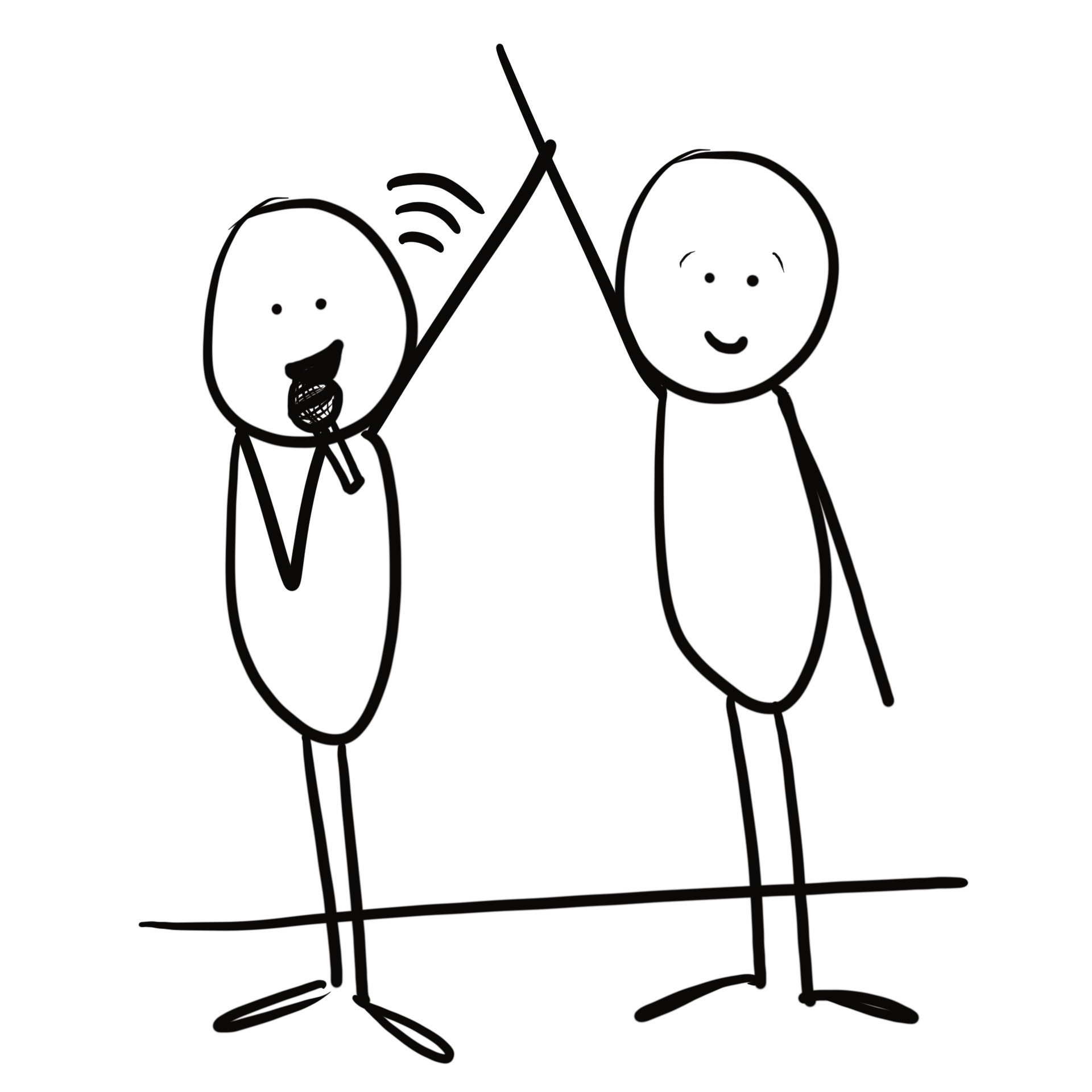
WHAT IT ALL ADDS UP TO
Looking back, there isn’t a straight line through any of this.
There’s a freckle-faced kid who struggled to fit in. Martial arts. An accidental audition. Entrepreneurship. Businesses that worked and businesses that didn’t. Bully Buster. Toastmasters. TEDx stages. Books. UCI. Sailing. And a lot of lessons I probably could have learned the easier way.
But there is a common thread.
Communication has changed my life.
Learning to stand up for myself gave me confidence. Theater taught me how to connect with an audience. Entrepreneurship taught me that a great idea means very little if you can’t communicate it clearly. Toastmasters taught me the value of practice and feedback. And coaching others has shown me that some of the most powerful ideas are already inside people—they just need help finding the words.
That’s what I do today.
I help people find the idea that matters, make it clear, and share it in a way people remember.
Those lessons also became SpeakerSHIP, the first book in my Getting Your SHIP Together® series. Next up is EntrepreneurSHIP, where I’m putting many of the hard-earned business lessons from this story to work.
Turns out, I’m still getting my SHIP together too.
Whether you’re preparing for a TEDx talk, keynote, important presentation, pitch, or another stage that matters, I’d love to hear what you’re working on.